
The Tyee Club
Since 1924, this historic fishing club has challenged anglers to catch Chinook salmon weighing over 30 pounds using only unmotorized rowboats.
Watch floatplanes land on the channel while bald eagles circle the old-growth cedars lining the rocky shoreline.
Located on the east coast of Vancouver Island, this community sits right on the edge of the ocean channel. The local economy relies heavily on forestry, aquaculture, and a steady stream of anglers chasing Pacific salmon. Thick forests of Douglas fir and western red cedar surround the residential neighbourhoods.
The ocean dictates the pace of life on this stretch of the Vancouver Island coast.
The morning starts early down at the Tyee Spit. Floatplanes fire up their engines, preparing to ferry workers and supplies to remote logging camps and coastal inlets. Out on the water, the main channel is a constant highway of marine traffic. Tugboats haul massive log booms south, while ferries cross the narrow strait to Quadra Island.
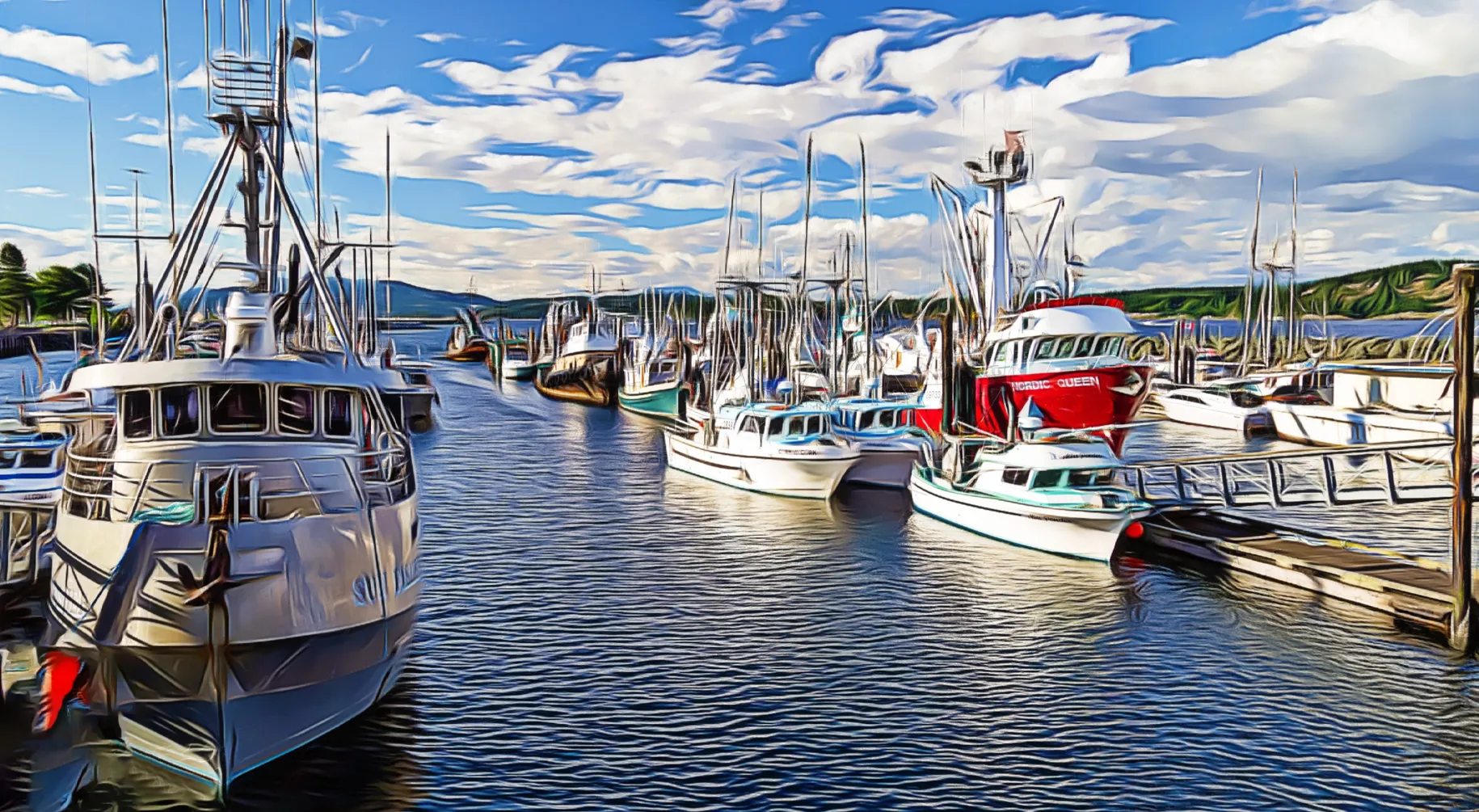
Late summer brings a surge of activity to the local marinas. Commercial fishing boats gear up for the season, sitting heavy in the water alongside sleek aluminum charter vessels. The seasonal salmon runs shape the town's calendar and fill the local menus, driving an industry that has defined this coastline for generations.
Back on land, the residential streets slope upward from the water. Locals spend their evenings down at Rotary Beach, where driftwood logs pile up against the sand and kiteboarders catch the strong afternoon winds. It is common to see bald eagles perched in the tall cedars that line the coastal highway, keeping a sharp eye on the tides below.
Away from the water, the landscape rises quickly into dense timber. Shoppers Row anchors the downtown core with independent cafes, hardware stores, and bakeries. Just a few minutes inland, the coastal winds fade away, replaced by the damp, quiet air of the dense coastal temperate rainforest. It is a practical, working town that happens to sit on the edge of the wilderness.
Residents trade long highway commutes for ocean views and immediate access to the backcountry.
The local geography creates a massive outdoor playground. Kayakers launch directly from the rocky beaches to paddle the sheltered areas of the coastline. Inland, the trail network at Strathcona Provincial Park winds through massive old-growth trees and alpine meadows. During the winter months, skiers make the short drive south to the slopes of Mount Washington.
Since 1924, this historic fishing club has challenged anglers to catch Chinook salmon weighing over 30 pounds using only unmotorized rowboats.
Canada's first saltwater fishing pier extends 150 feet into the ocean, complete with built-in rod holders and fish cleaning stations.
Fast-moving tidal currents bring seals, sea lions, and passing pods of orcas close to the local beaches.
Hikers trek a forested path to view the site of the 1958 underwater explosion that cleared a treacherous marine hazard from the Seymour Narrows.
A catch-and-release aquarium near the waterfront displays sea stars, crabs, and rockfish collected from local waters.
Historic exhibits and restored fishing vessels document the long history of commercial fishing on the coast.
Drivers heading north from Nanaimo reach the city in about three hours via Highway 19, which connects Campbell River to the rest of Vancouver Island. Regional flights land at the local airport (YBL), bringing in workers and visitors from the mainland. Those arriving from Vancouver take the BC Ferries route to Nanaimo before driving up the eastern coastline. Once in town, the main commercial districts are easy to get around by car, with ample parking near the waterfront.
Campbell River, BC