
Ripple Rock: the blast that tamed Seymour Narrows
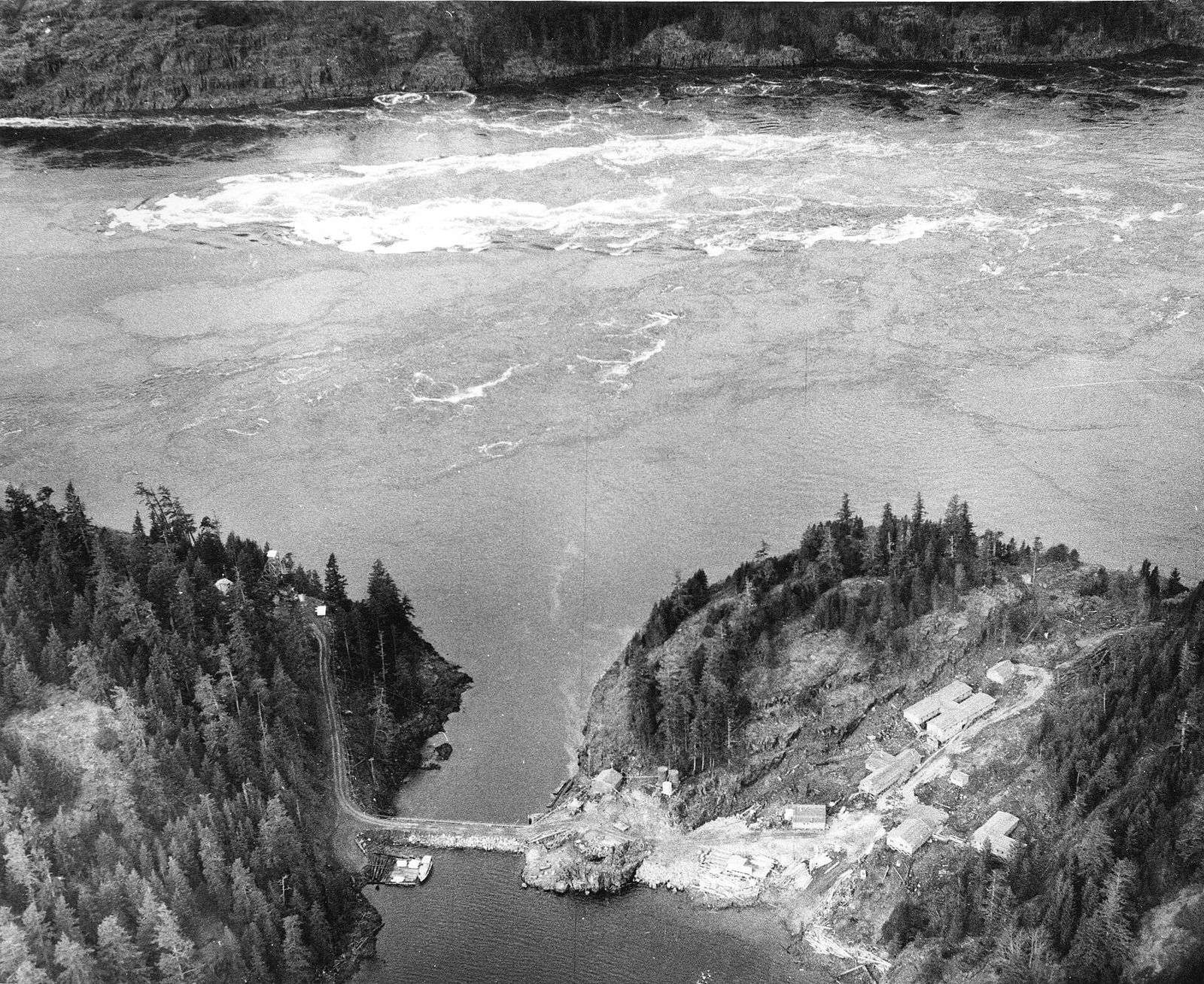
For a century a hidden twin-peaked rock wrecked ships north of Campbell River. In 1958 Canada blew it up, live on national TV.
Just north of Campbell River, Discovery Passage squeezes into Seymour Narrows, one of the fastest tidal channels on the coast. For generations the narrows hid Ripple Rock, an underwater mountain with two peaks that sat just below the surface at low tide.
Ripple Rock is blamed for sinking or damaging more than 100 vessels and taking more than 100 lives. Early attempts to drill it from floating barges failed in the current.
Going in from underneath
The solution was to tunnel. Miners sank a shaft on Maud Island, drove a tunnel under the seabed and bored up into both peaks, then packed them with about 1,400 tonnes of explosives.
At 9:31 a.m. on April 5, 1958, the charge went off in one of the largest non-nuclear planned explosions in history. Hundreds of thousands of tonnes of rock and water went into the sky, and the CBC carried it live across the country.
See it today
The Ripple Rock Trail, off Highway 19 north of town, winds through forest and over bluffs to a lookout above the narrows. Plan on a half day, time your visit for a big tide change and you can watch whirlpools spin where the rock used to be.
Back in town, the Museum at Campbell River tells the full story with photos and film of the blast.